Home / The 60-day warehouse window
The 60-day warehouse window
Storage, the 120-hour return clock, QC photos and the paid pre-checks, in the order they hit you.
Four deadlines, one starting gun
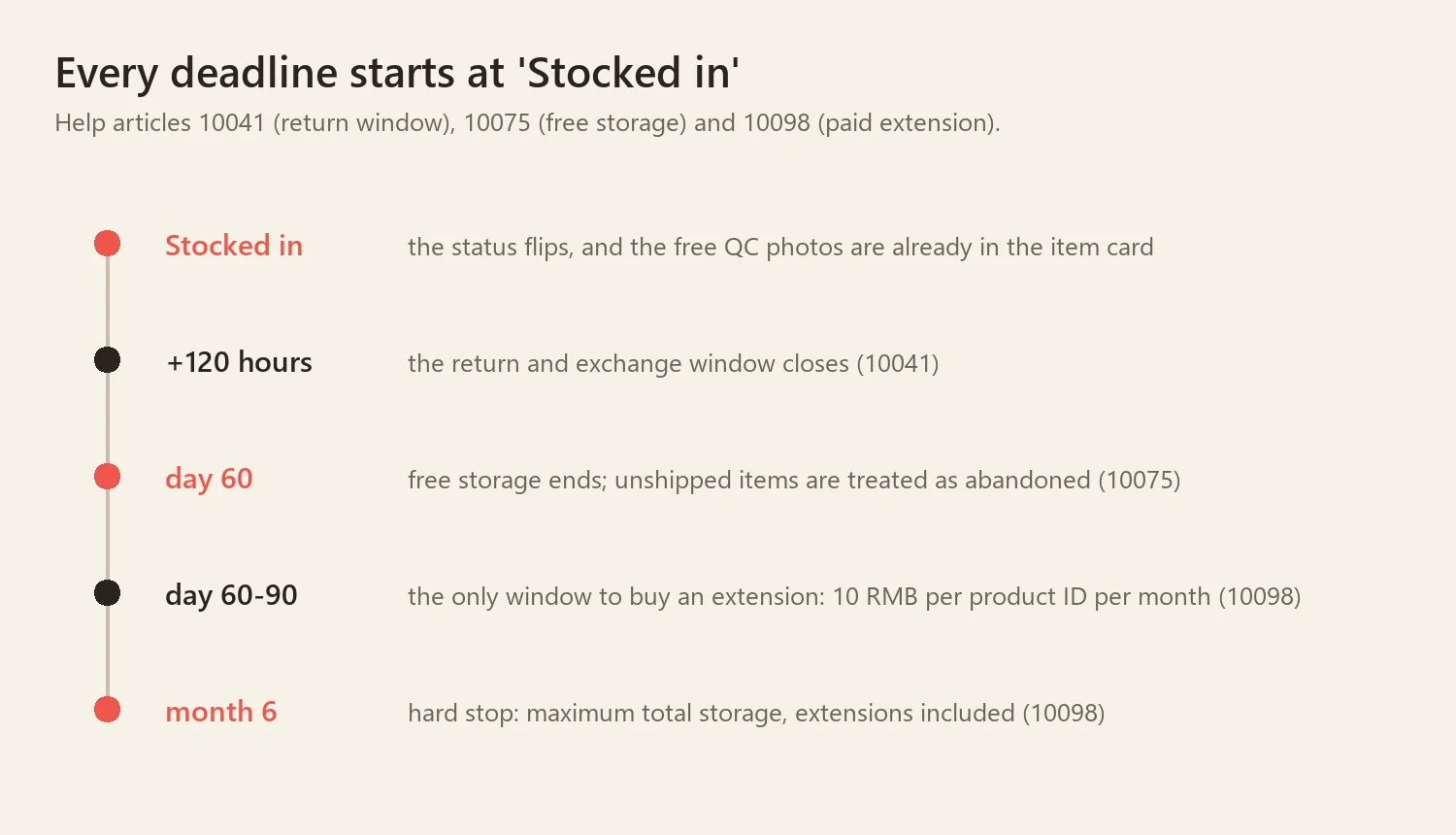
The status change to Stocked in starts everything: 120 hours to request a return or exchange (article 10041), 60 free storage days counted from 'stored' (article 10075), a 60-to-90-day window in which an extension can still be bought at 10 RMB per product ID per month, and a six-month ceiling after which nothing stays (article 10098).
A haul is a schedule against these clocks. The practical rule: the first item you buy sets the deadline for the last one, because they all need to be in the same warehouse pool before day 60 of the earliest arrival.
What the free QC photos actually check
Inspection covers appearance: colour, large-area damage, stains, size, model and version number, with apparel checked against your remark and the label size. It explicitly does not cover colour difference, exact-measurement error or how the thing performs; electronics get an appearance check only (article 10086).
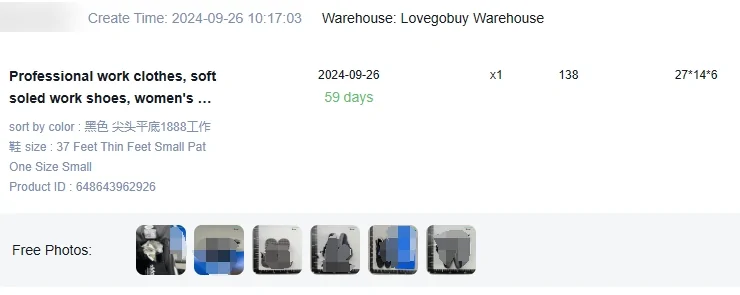
How to read the QC set quickly: confirm the variant tag against your 'sort by color' pick, count pieces against Quantity, and zoom the version number when the listing names one. Do it within your 120 hours, not at parcel time. The item card shows them the moment stock-in completes, under a 'Free Photos' label, and paid 'Detailed Photo' shots at 1 RMB each exist for the questions the standard angles cannot answer (articles 10098, 10099).
The 120-hour decision, and who pays for it
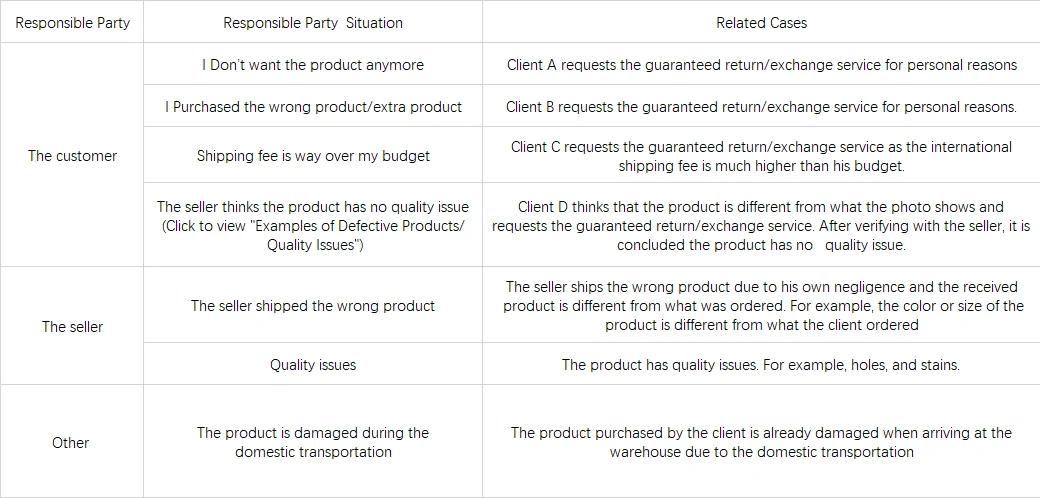
Inside the window, returns and exchanges run on a responsibility table: buyer reasons, seller reasons and transport damage are handled differently, and non-buyer reasons cost you nothing (article 10041). The fee side of that table is a dated image hosted outside the operator's own CDN, so this site quotes the mechanics and leaves the amounts to the live article.
After the window closes, QC evidence still matters: quality claims lean on those same photos. The sequence that works: photos first, return call second, combine plans third.
Two small fees that de-risk a big box
Rehearsal Packing, 20 RMB per parcel, has the warehouse pack and weigh your selection before you submit, turning the estimate into a measurement while you can still re-cut the box. Parcel Photo, 5 RMB, shoots the parcel before and after sealing (article 10098).
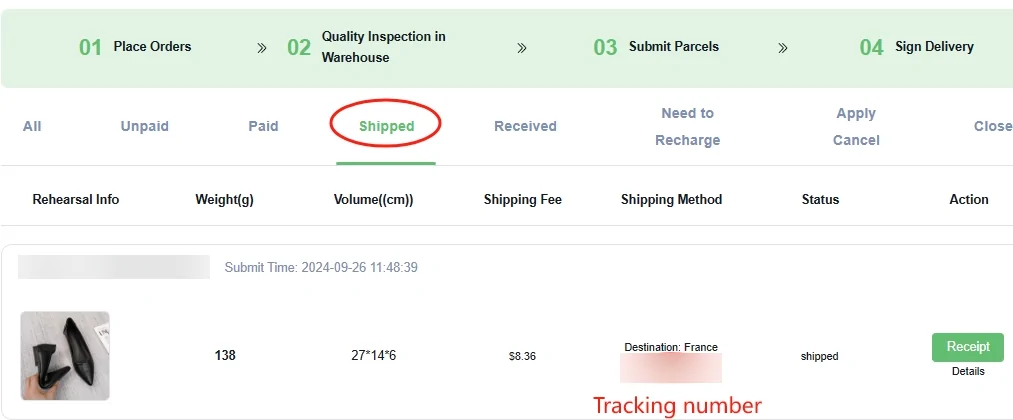
The Parcel list even has a 'Rehearsal Info' column waiting for it, next to Weight(g), Volume((cm)) and Shipping Fee. On a borderline combine call, 20 RMB against a 426 RMB swing is the cheapest certainty on this site.